Personal protein target
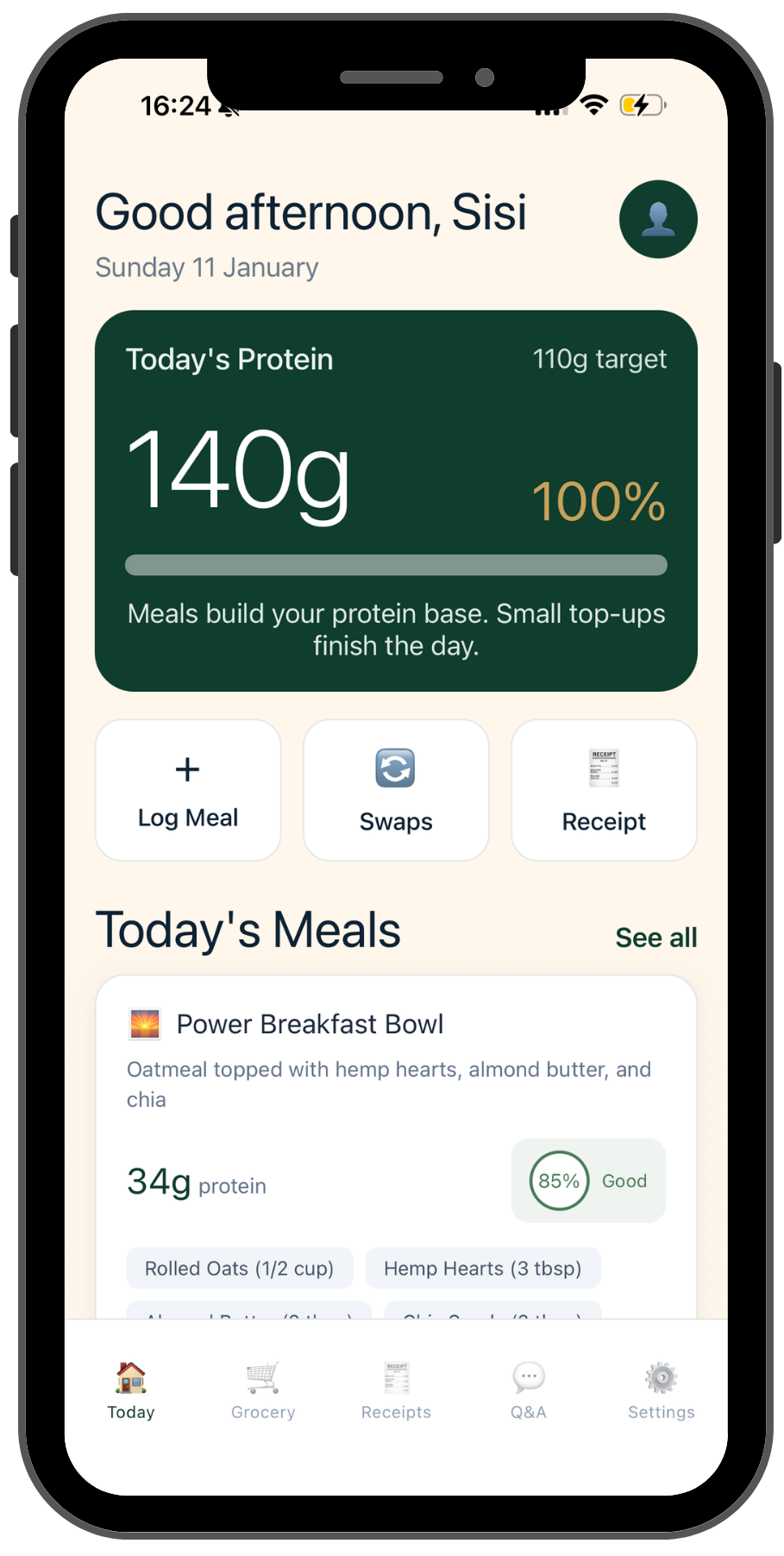
Users start with a daily protein target based on their body, activity level, and goal, then build the day around simple 20g, 30g, and 40g meal blocks.
A plant-based protein planning app that helps vegans, flexitarians, gym-goers, and plant-curious eaters build high-protein days with meal blocks, EAA confidence, smart swaps, grocery lists, and Protein Receipts — without calorie tracking or macro maths.
The wedge is not vegan meal planning. It is protein confidence: helping people answer, “Did my plant-based day add up?” without making them count every calorie, weigh every ingredient, or become nutrition scientists.
The product turns plant-based protein into a calm planning system: set a target, choose 20g, 30g, or 40g meal blocks, check EAA confidence, adapt with smart swaps or fridge combos, generate a grocery list, and share a Protein Receipt when the day adds up.
As someone who is vegan, lifts, and has competed in bodybuilding, I knew the “where do you get your protein?” question was not only nutritional. It was emotional: people want confidence without defending every meal.
The product reframes protein planning as proof, not pressure. Instead of telling users to log everything, it helps them build from useful plant-protein combinations, protect amino acid coverage, and leave with a receipt they can understand at a glance.
The app needed to feel clear enough for plant-based beginners, useful enough for gym-focused users, and welcoming enough for anyone trying more plant-based meals.
Users start with a daily protein target based on their body, activity level, and goal, then build the day around simple 20g, 30g, and 40g meal blocks.
Ready-made plant-protein combinations help users plan OMAD, 2, 3, or 4-meal days without guessing what pairs well or how much each meal contributes.
The app makes protein quality visible by showing whether the day covers the 9 essential amino acids the body cannot make, not just the total grams.
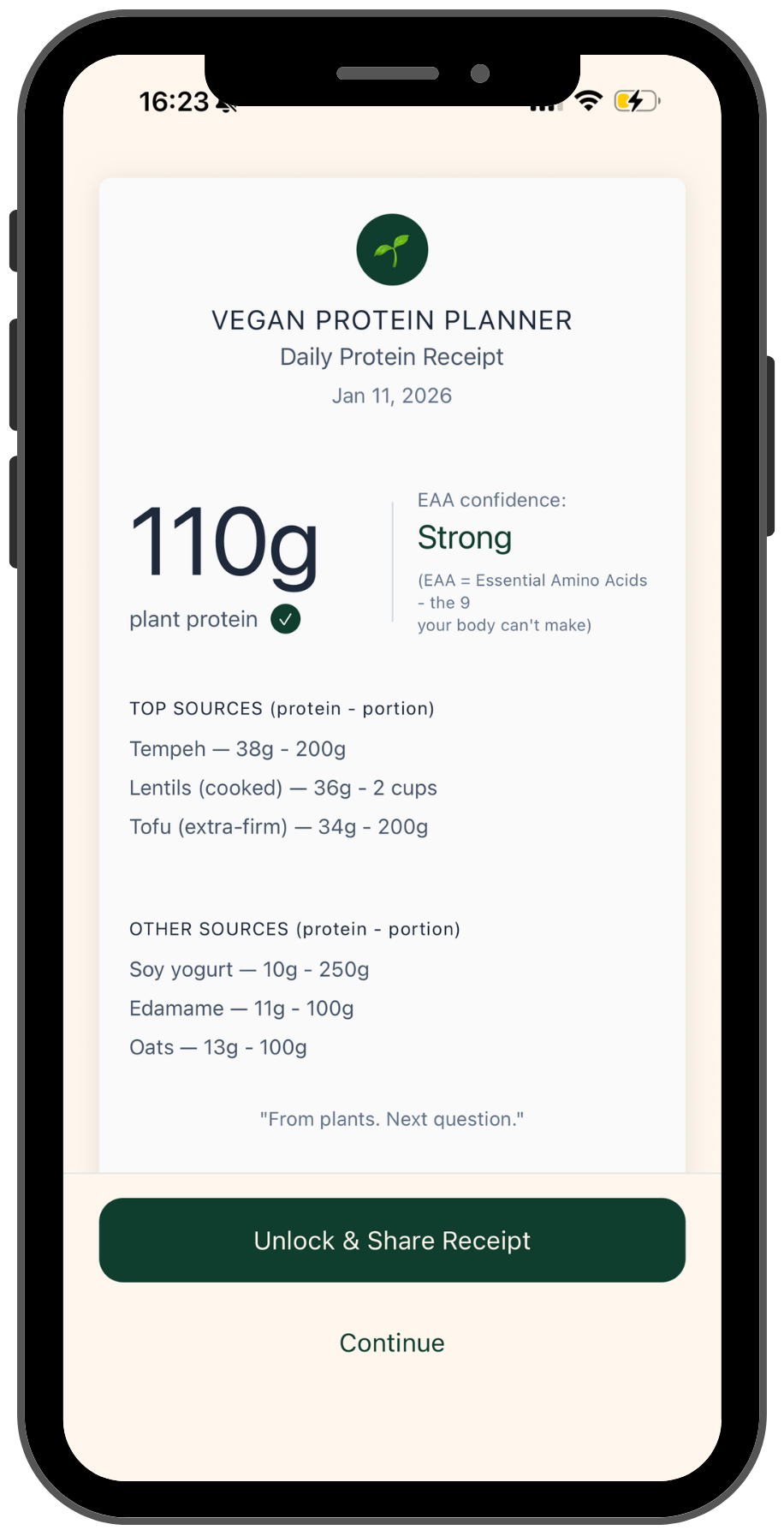
Daily receipts turn total protein, top sources, and EAA confidence into a shareable proof moment — useful for progress, socials, or the protein debate.
The product direction had to make plant-based protein feel simple, credible, and repeatable while avoiding the heaviness of traditional macro tracking.
The product system keeps the experience focused: calculate the target, choose a meal structure, add plant-protein blocks, protect quality with swaps, turn combos into a grocery list, and make the result easy to save or share.
The app estimates a daily protein target from the user’s goal, body stats, activity level, and preferred meal structure.
Users build OMAD, 2, 3, or 4-meal days from ready-made 20g, 30g, and 40g combos instead of logging every ingredient from scratch.
Protein quality becomes visible, showing whether the day covers the essential amino acids the body cannot make.
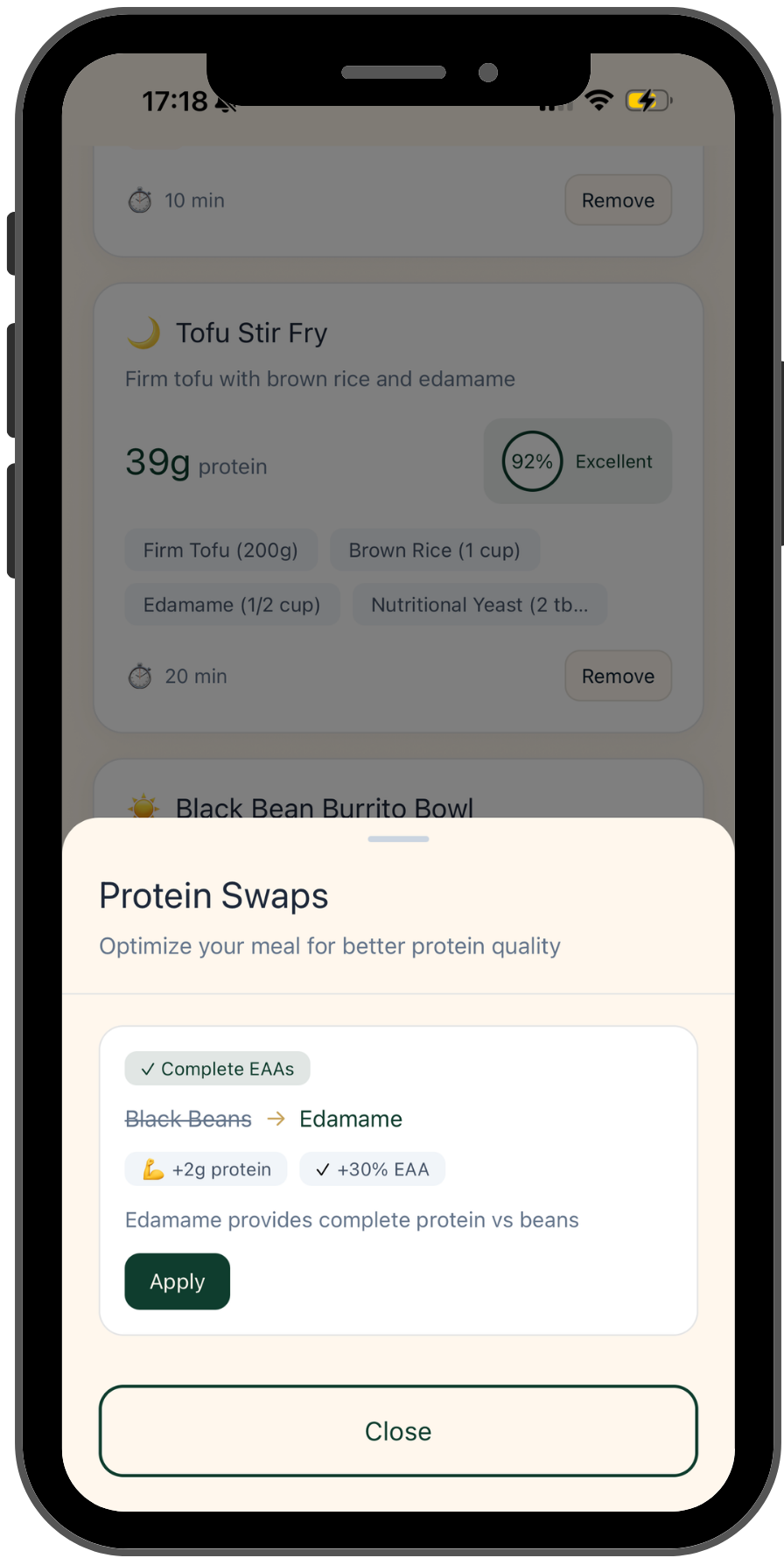
Smart swaps help users adjust for missing ingredients, soy-free, gluten-free, no-cook, or budget preferences while protecting protein quality.
Protein Receipts and weekly wins turn consistency into proof users can understand, repeat, and share.
Every major decision was designed to reduce protein anxiety: fewer numbers, clearer combinations, better quality signals, practical grocery support, and a positive proof moment at the end.
The app focuses on the question users actually have: “Am I getting enough plant protein, and does the day feel balanced?” EAA confidence explains essential amino acid coverage in plain language, without asking users to become nutrition scientists.
20g, 30g, and 40g meal blocks make planning feel fast and practical instead of turning every meal into a spreadsheet.
Smart swaps and fridge combos help users adapt around preferences, missing ingredients, and real-life meals without rebuilding the day.
Protein Receipts turn the “where do you get your protein?” question into a clear, shareable summary.
The product is credible for vegans, but welcoming for anyone adding more plant-based meals and wanting the protein part to feel effortless.
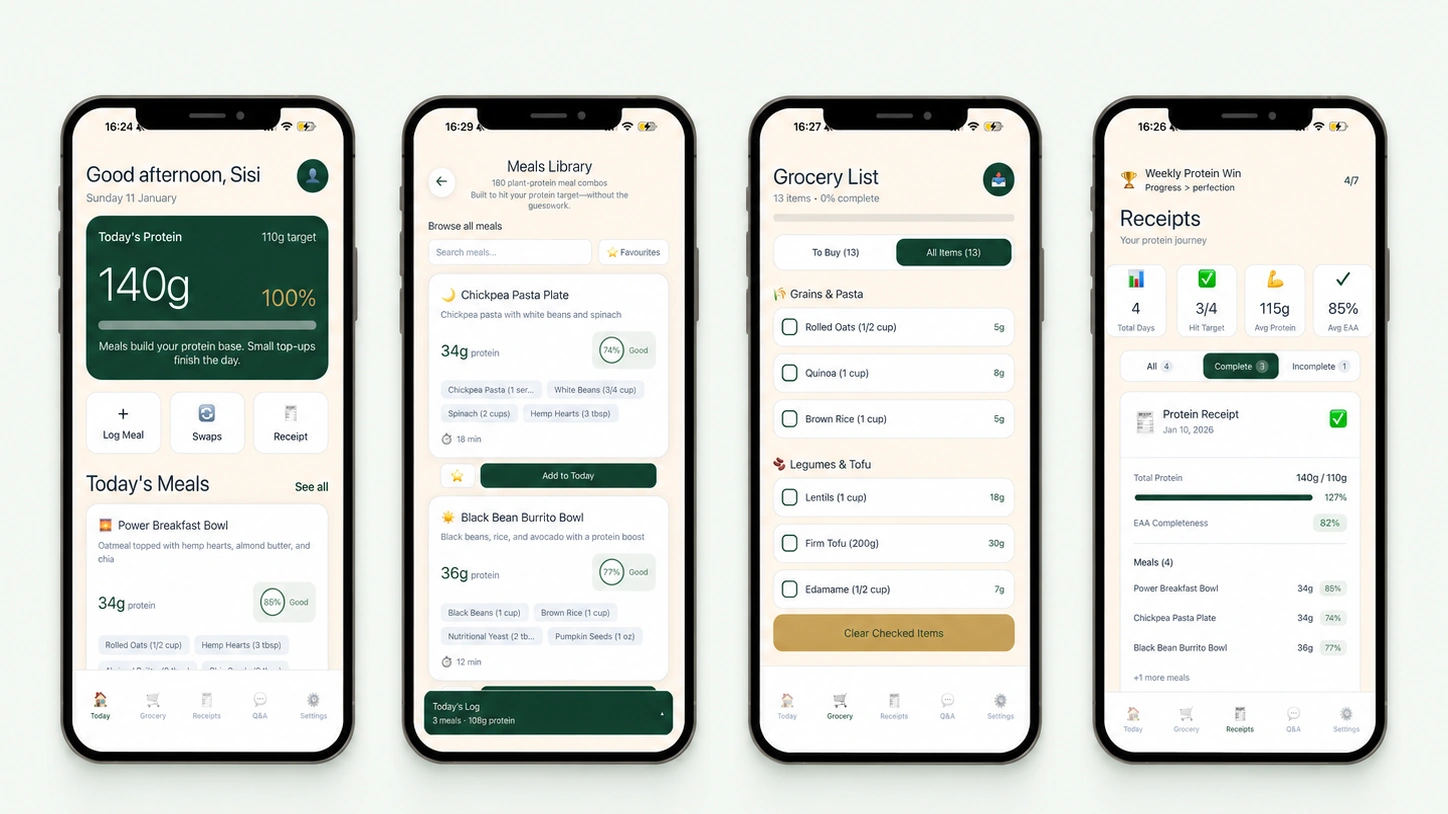
These screens show the full product loop: build a day from protein-rich plant meals, protect amino acid coverage with swaps, generate a daily receipt, and track weekly wins without macro tracking.
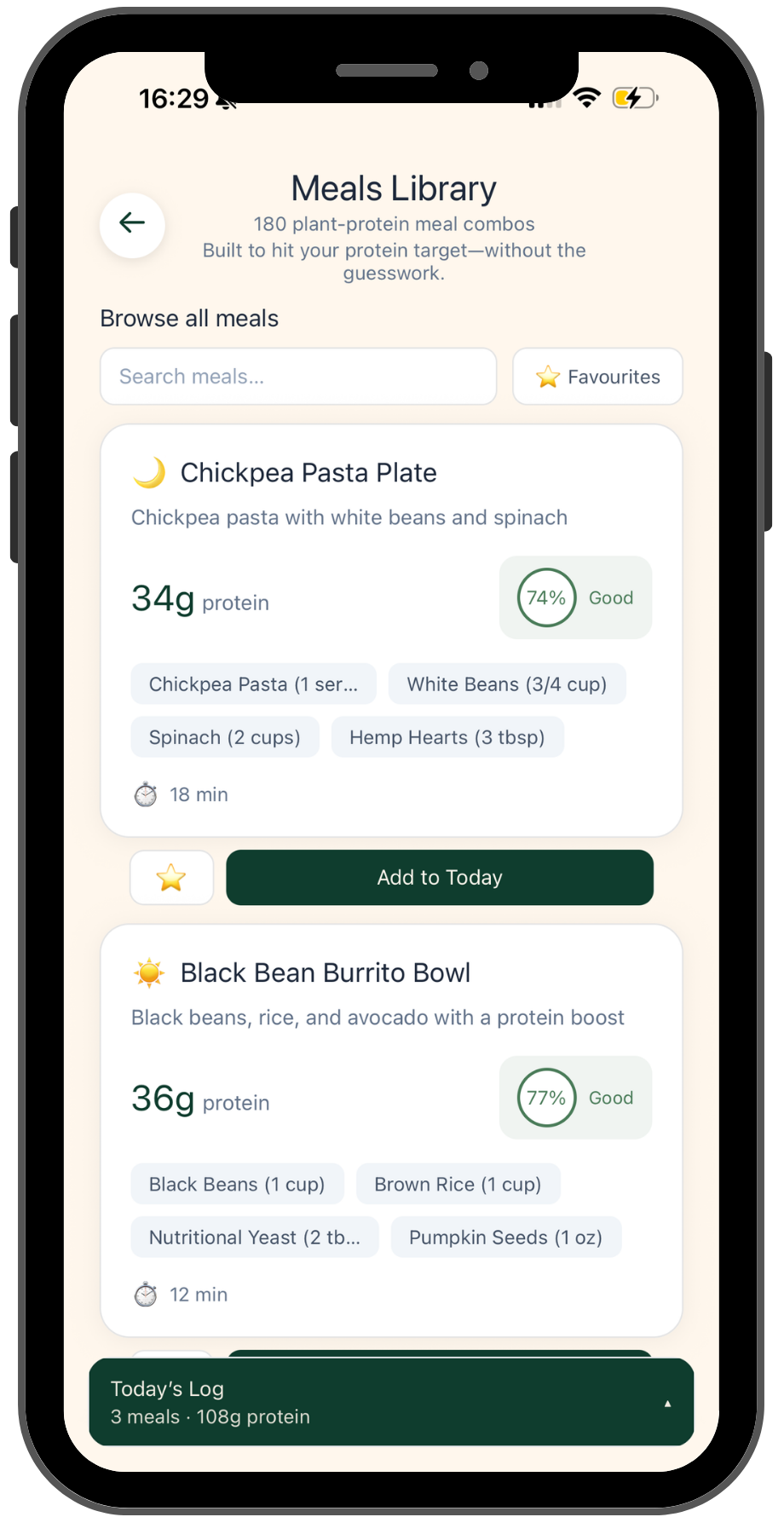
Each meal shows protein grams and EAA confidence, so the day feels clear without calorie tracking.
Users can swap an ingredient or preference without losing the amino acid balance of the day.
Daily proof shows total grams, top sources, and EAA confidence in one clean summary.
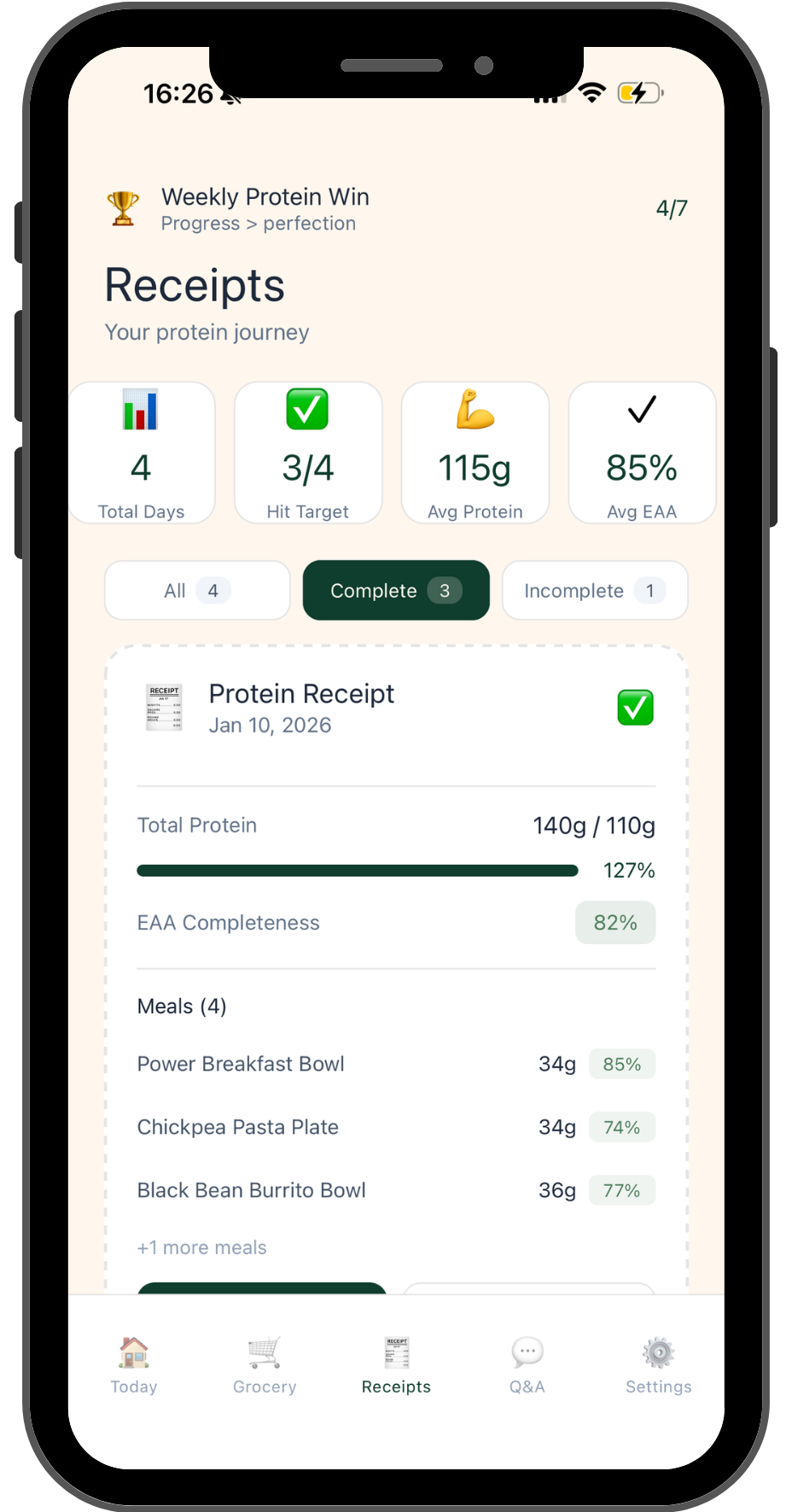
Receipts turn consistency, averages, and target hits into a simple progress view.
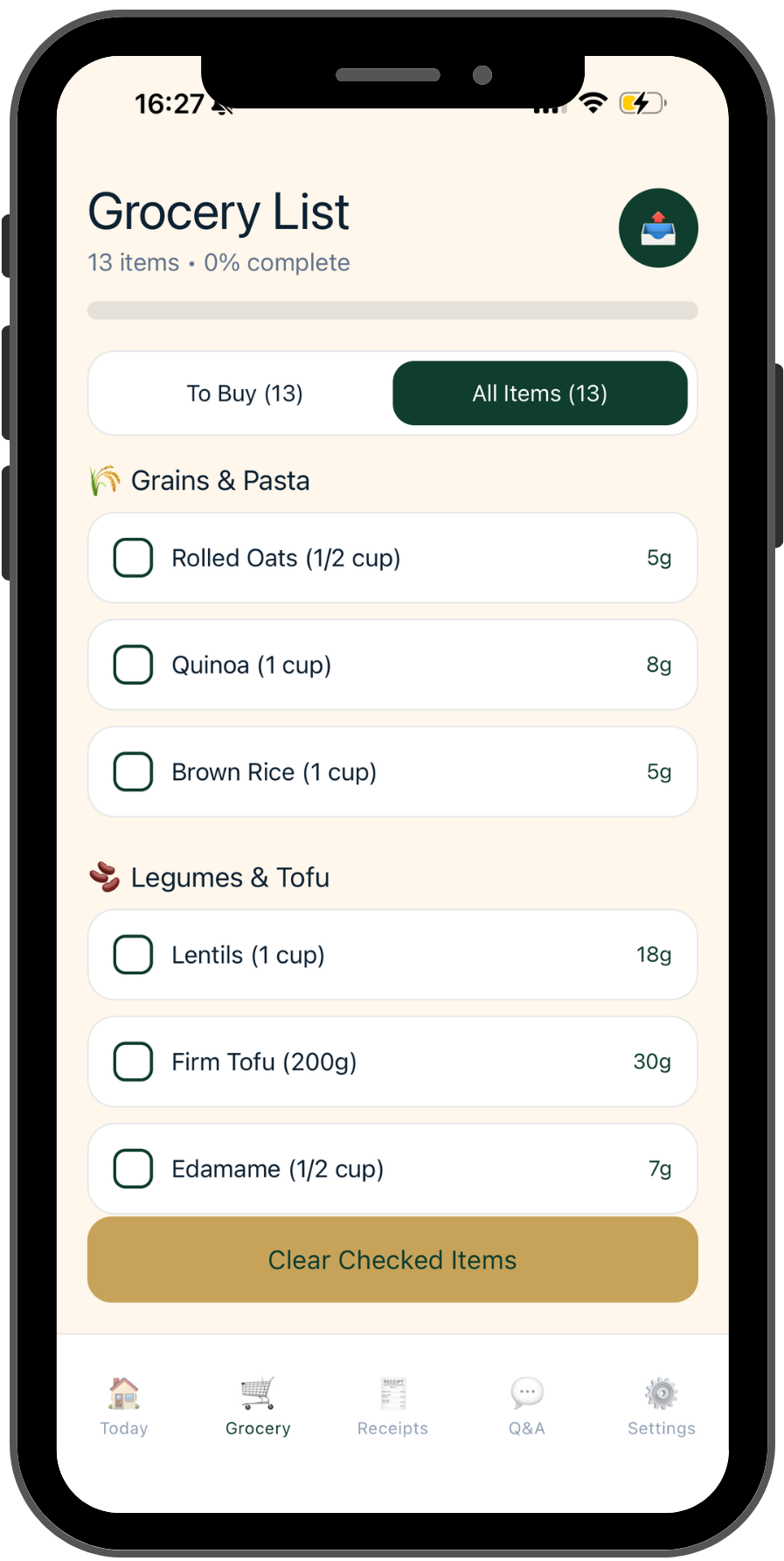
The grocery list turns chosen combos into practical ingredients, so planning does not stop at inspiration. It helps users move from “I should eat more protein” to “this is what I need to buy.”
Vegan Protein Planner is positioned as a protein clarity app, not a diet app: built for vegans, flexitarians, gym-goers, busy people, and anyone trying more plant-based meals without worrying whether they are getting enough protein.
Vegan Protein Planner reinforced that a health app can feel more useful when it reduces decisions, explains the right signal, and gives users confidence they can actually repeat.
The strongest product wedge is not logging everything. It is helping users answer the one question they care about: “Did my day add up?”
EAA confidence gives protein quality a clear interface, making essential amino acid coverage easier to understand.
Protein Receipts turn progress into a visual moment users can save, share, or use to quietly answer the protein question.